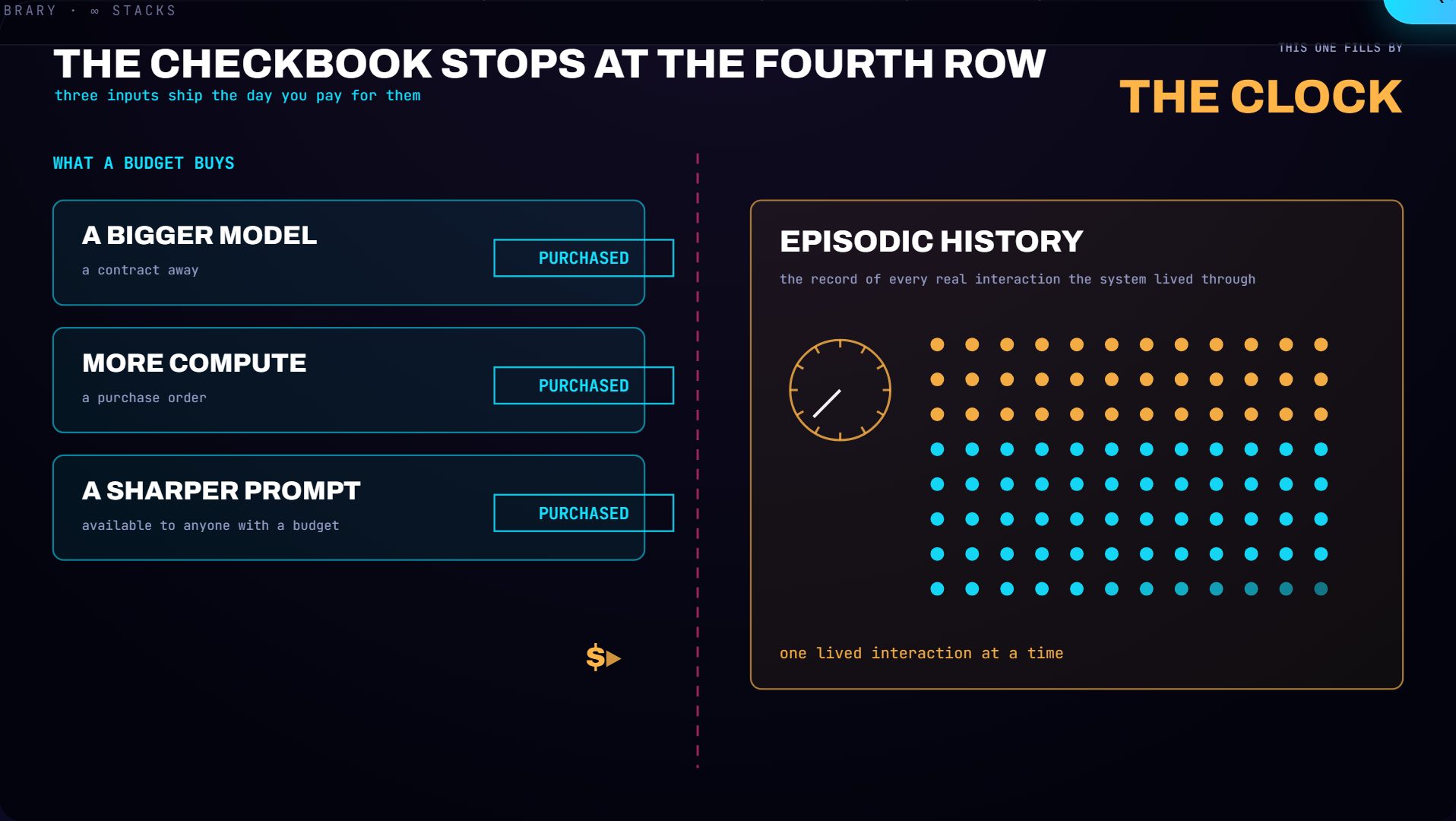
Almost every advantage in this field can be bought. A better model is a contract away. More compute is a purchase order. A sharper prompt, a cleaner retrieval pipeline, a faster vector store, all of it is available to anyone with a budget, which means none of it is a moat, because a moat is the thing your competitor can't acquire by spending. There's one asset in an agentic system that resists the checkbook: the accumulated, time-stamped record of every real interaction the system has lived through. You can't buy a year of that. You can only have spent the year.
That asset is a structural advantage, and the case for it has to be made carefully, because the data-moat argument is usually overclaimed into meaninglessness. Most of what gets called a data moat is a pile of logs that commoditizes the moment a foundation model gets good enough to ignore it. The real moat is narrower and harder, and it's specific to the kind of memory a temporal knowledge graph accumulates. The earlier essays built that graph: essay two gave it time, essay six fed it, essay eight ran it in production. Once it's running, the clock itself becomes the defense, and the only way to start the clock is to start.
What episodic memory actually is
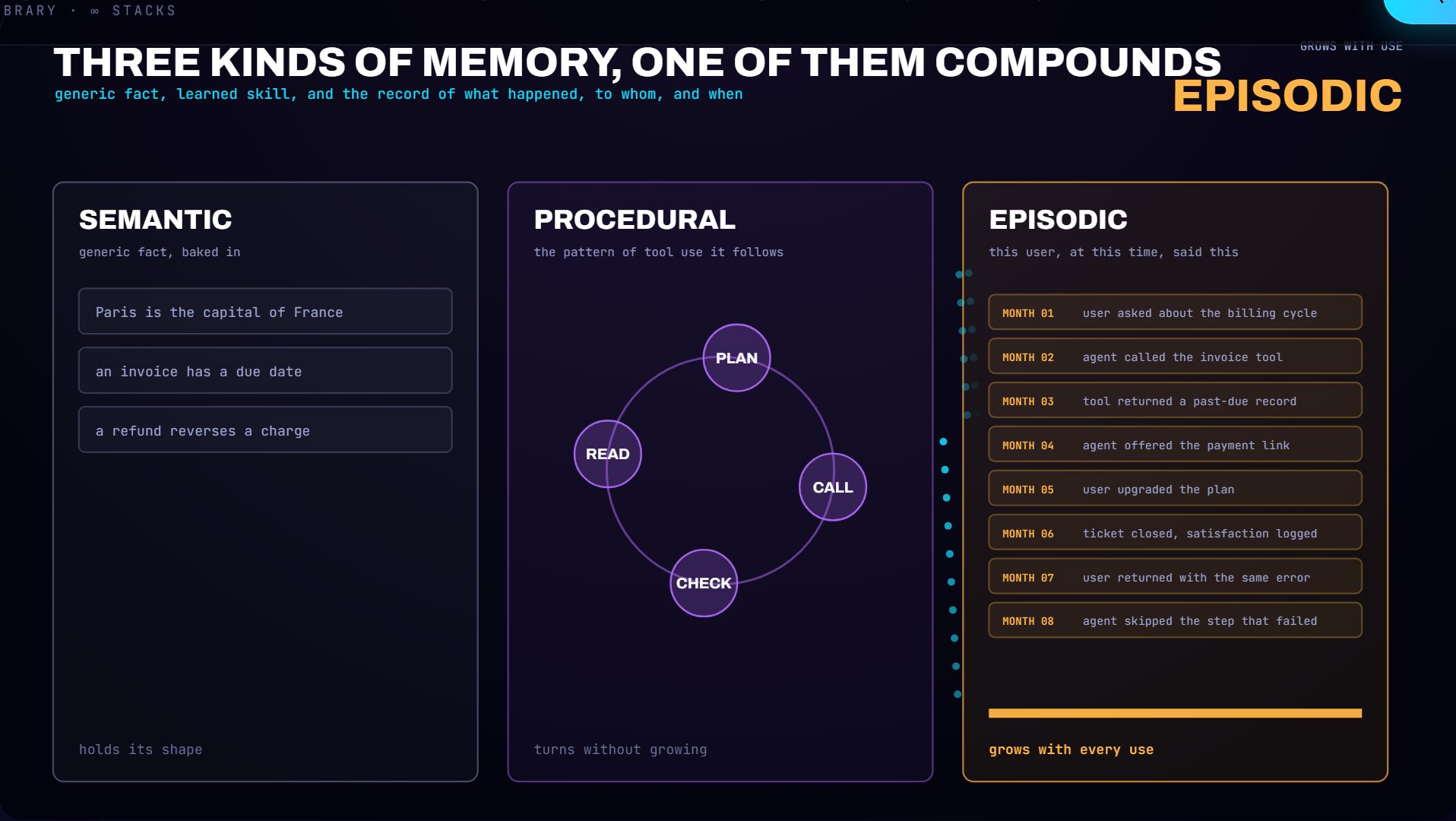
The word memory gets used loosely, so start with the distinction that matters. An agentic system has three kinds of memory, and only one of them compounds the way this essay means. Semantic memory is generic fact, the knowledge baked into model weights or a static graph, that Paris is the capital of France. Procedural memory is skill, the patterns of tool use and workflow the system follows. Episodic memory is the record of specific events: this user, at this time, in this state, said this, the agent did that, the tool returned this, the outcome was that. The gap between semantic and episodic memory is the difference between knowing how the world works in general and remembering exactly what happened, to whom, and when.
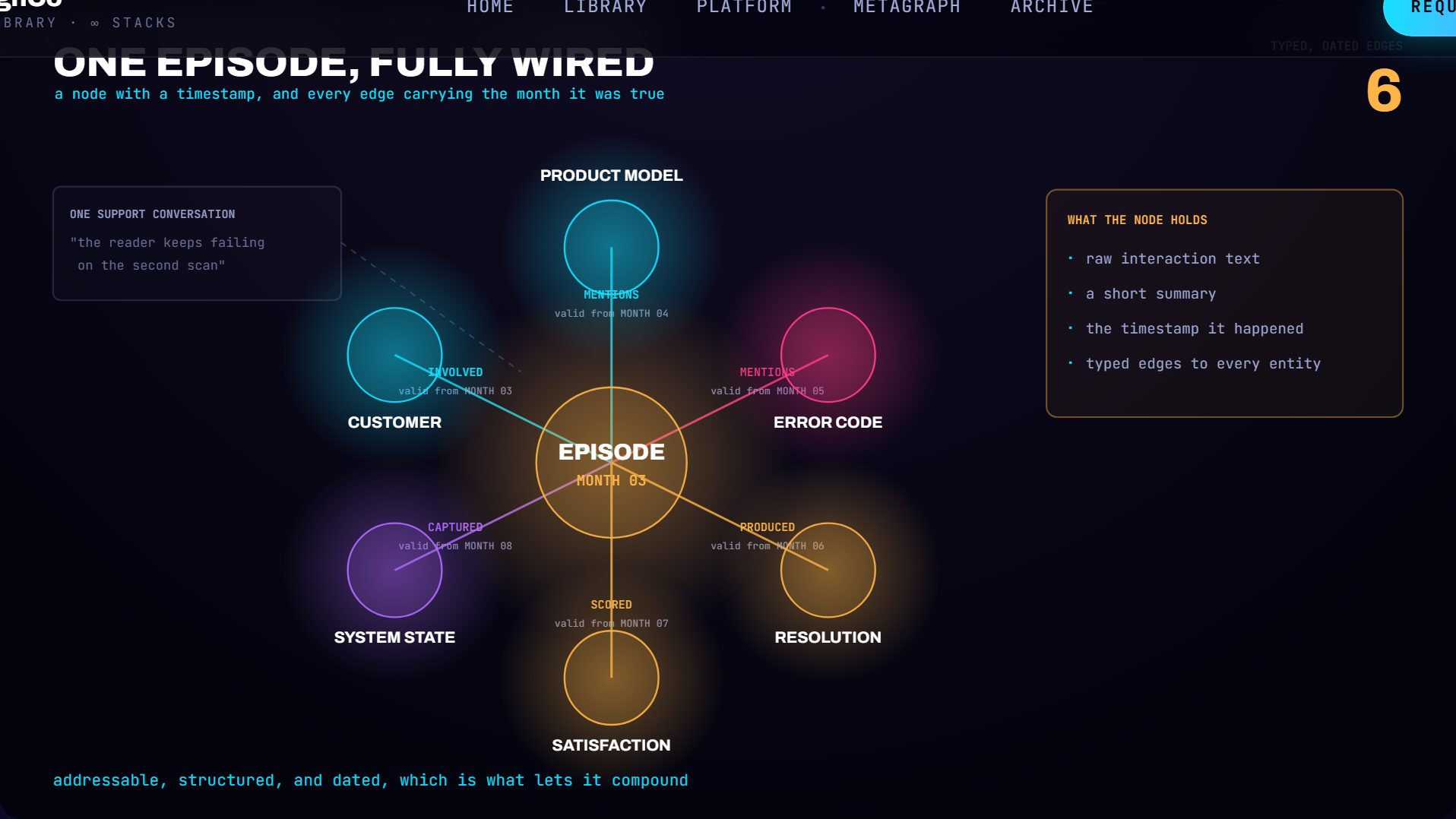
In a temporal knowledge graph, an episode is a concrete object. It's a node with a timestamp, holding the raw interaction and a short summary, wired by edges to the user it involved, the entities it mentioned, the tools it called, the tickets or tasks it created, and the state the system was in. A single support conversation becomes an episode node linked to the customer, the product model, the error code, the resolution, and the satisfaction score, every edge carrying the time it was true. On the surface it looks like a log line. Under the hood it's a structured, addressable, time-stamped piece of a graph, and that structure is the whole reason it can compound instead of merely pile up.
Why it compounds
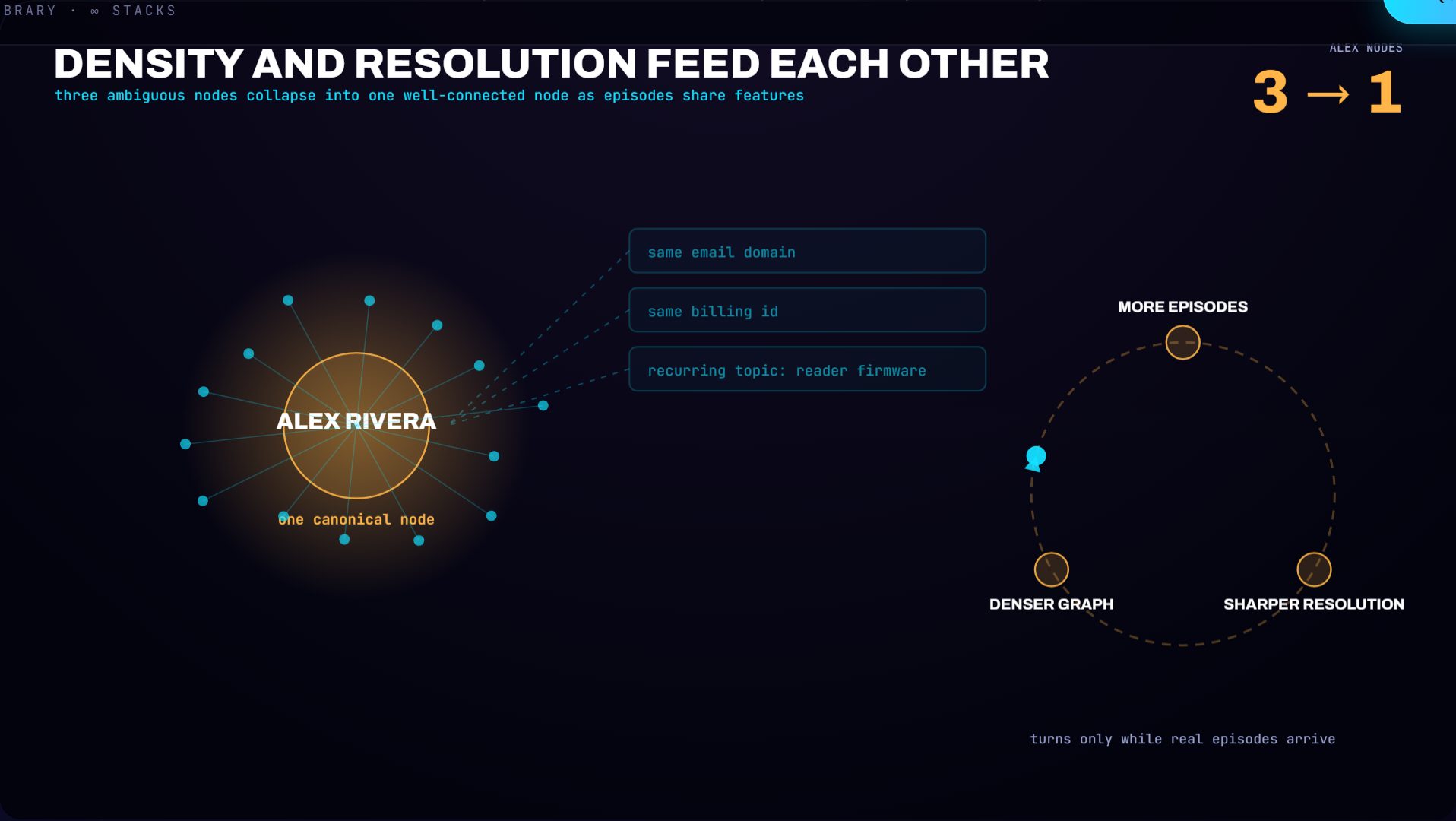
The difference between an asset and a pile is compounding, and episodic memory compounds through five specific mechanisms. The first is entity resolution, and it's a feedback loop. Every new episode mentions entities the graph has seen before, a user, a product, a project, under new contexts and new spellings, and each fresh mention adds features the resolution step uses to decide what merges with what. A name that was three ambiguous nodes early on collapses into one well-connected node once enough episodes share its email, its billing details, its recurring topics. A denser graph resolves the next episode more accurately, and the more accurate integration densifies the graph further. The loop runs in your favor, and it only runs while episodes arrive.
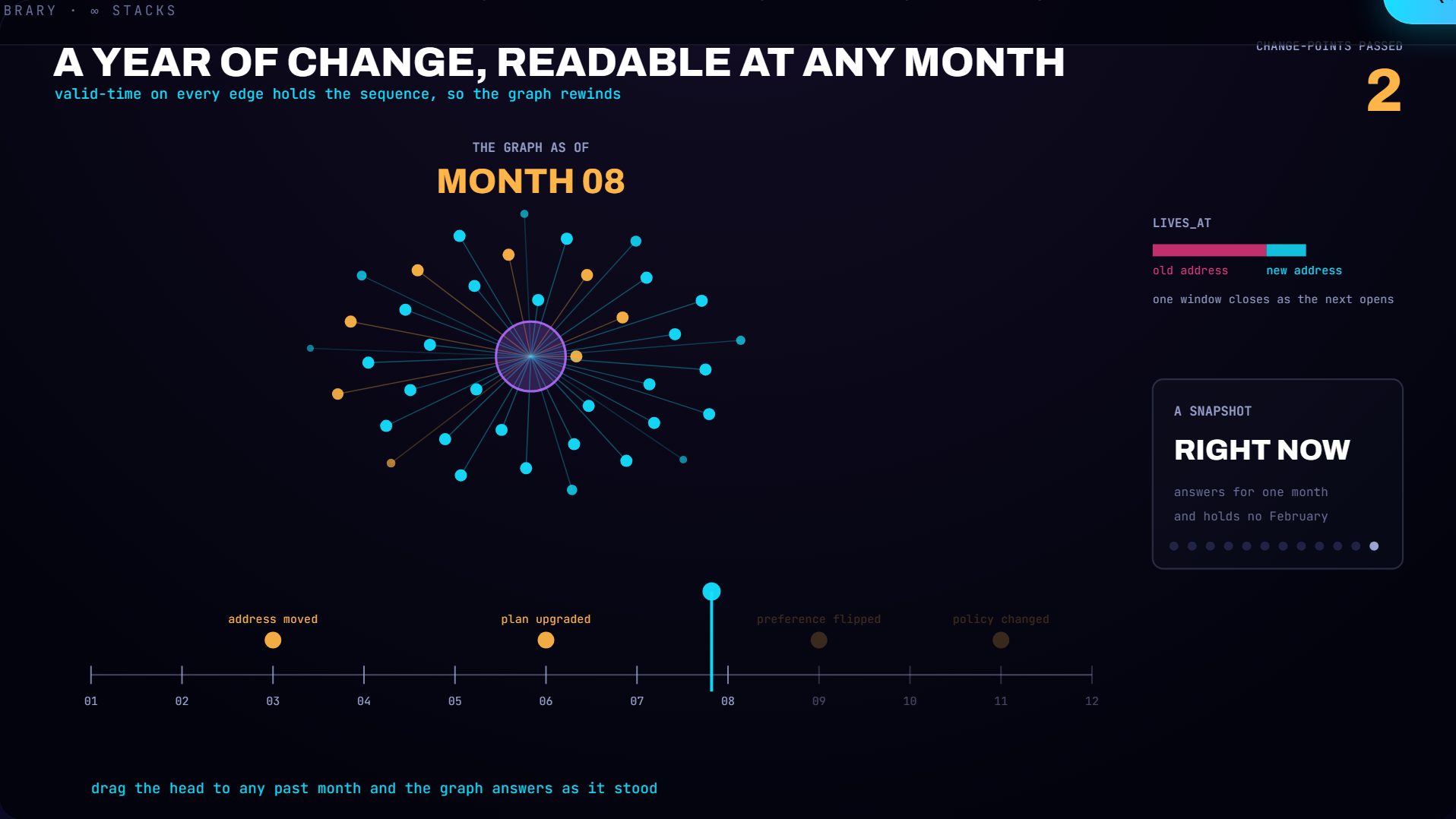
Time itself is the second mechanism. Because every edge carries a valid-time interval, the graph holds more than the current state. It holds the sequence of changes: when the address moved, when the plan upgraded, when the preference flipped, and which episode caught each turn. A year of that is a versioned history thick with change-points, and the record of what contradicted what becomes its own signal, telling you which fields churn and which sources keep getting it wrong. A competitor holding a snapshot of right now can't say what was true in February, or how behavior bent after a policy changed, because those answers live in the longitudinal depth only elapsed time lays down.
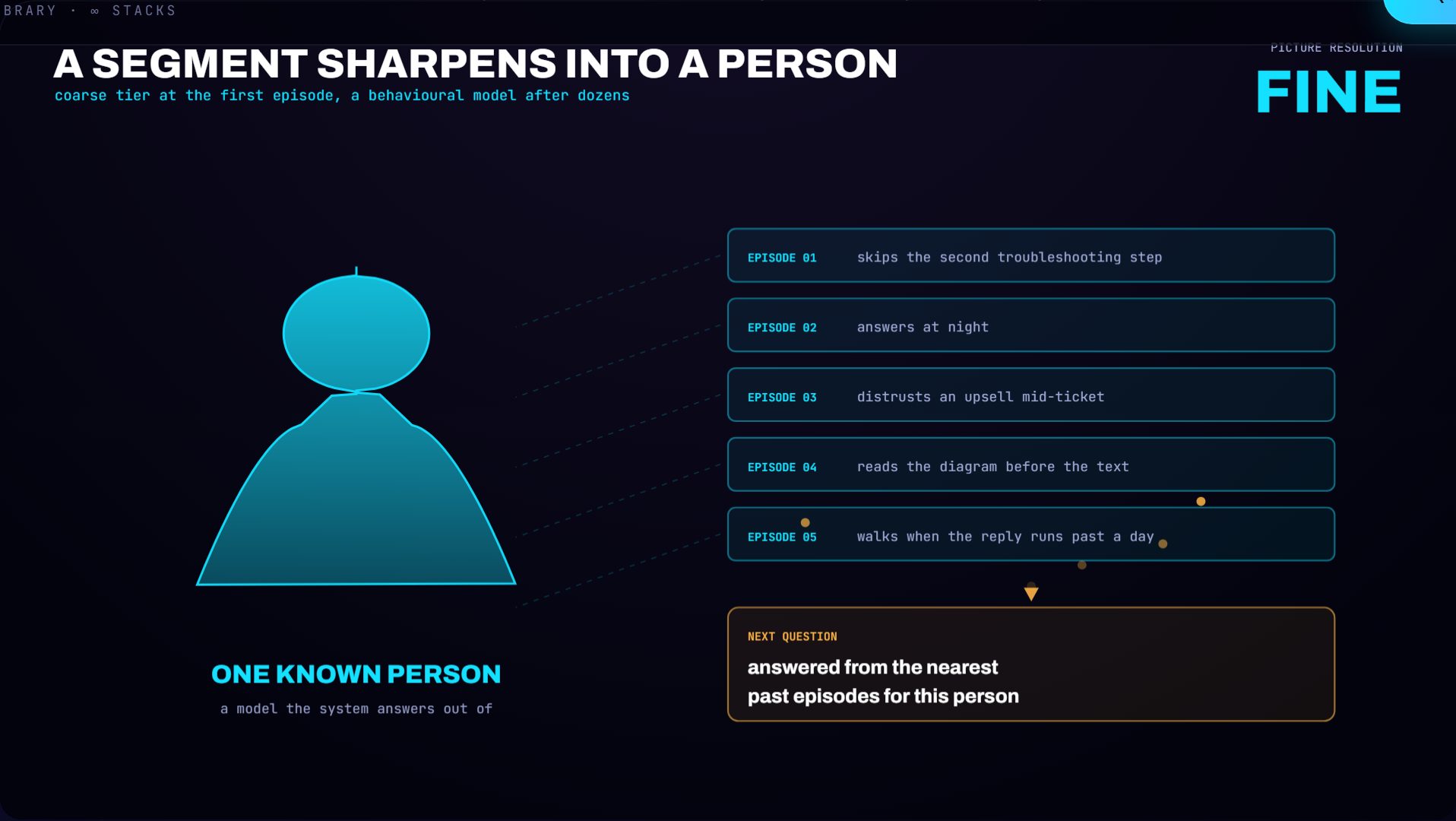
The third mechanism, personalization, sharpens the same way. Early episodes give you a coarse picture, premium versus standard. After dozens, you hold a fine-grained, almost causal model of one person: which troubleshooting steps they skip, which explanations land, when they answer, what they tolerate and what makes them walk. At inference the agent pulls the nearest past episodes for this user and answers out of them, so every new episode both feeds the model and is fed by it.
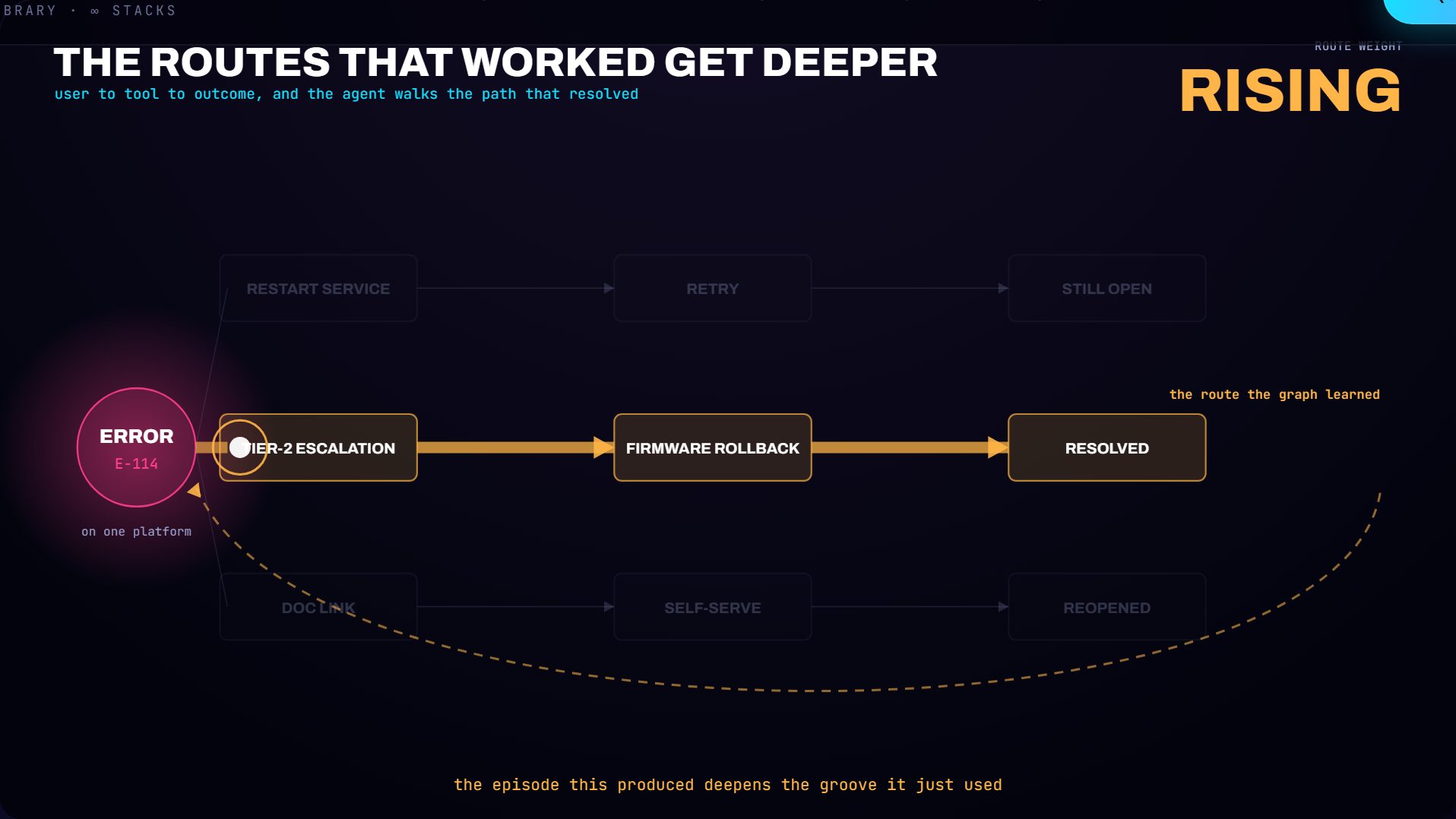
A fourth loop runs above the others. As episodes connect users to tools to outcomes, multi-hop patterns surface that the graph can act on (this error on this platform usually needs that escalation), and an agent that walks the paths that worked lays down better episodes that deepen the grooves it just used.
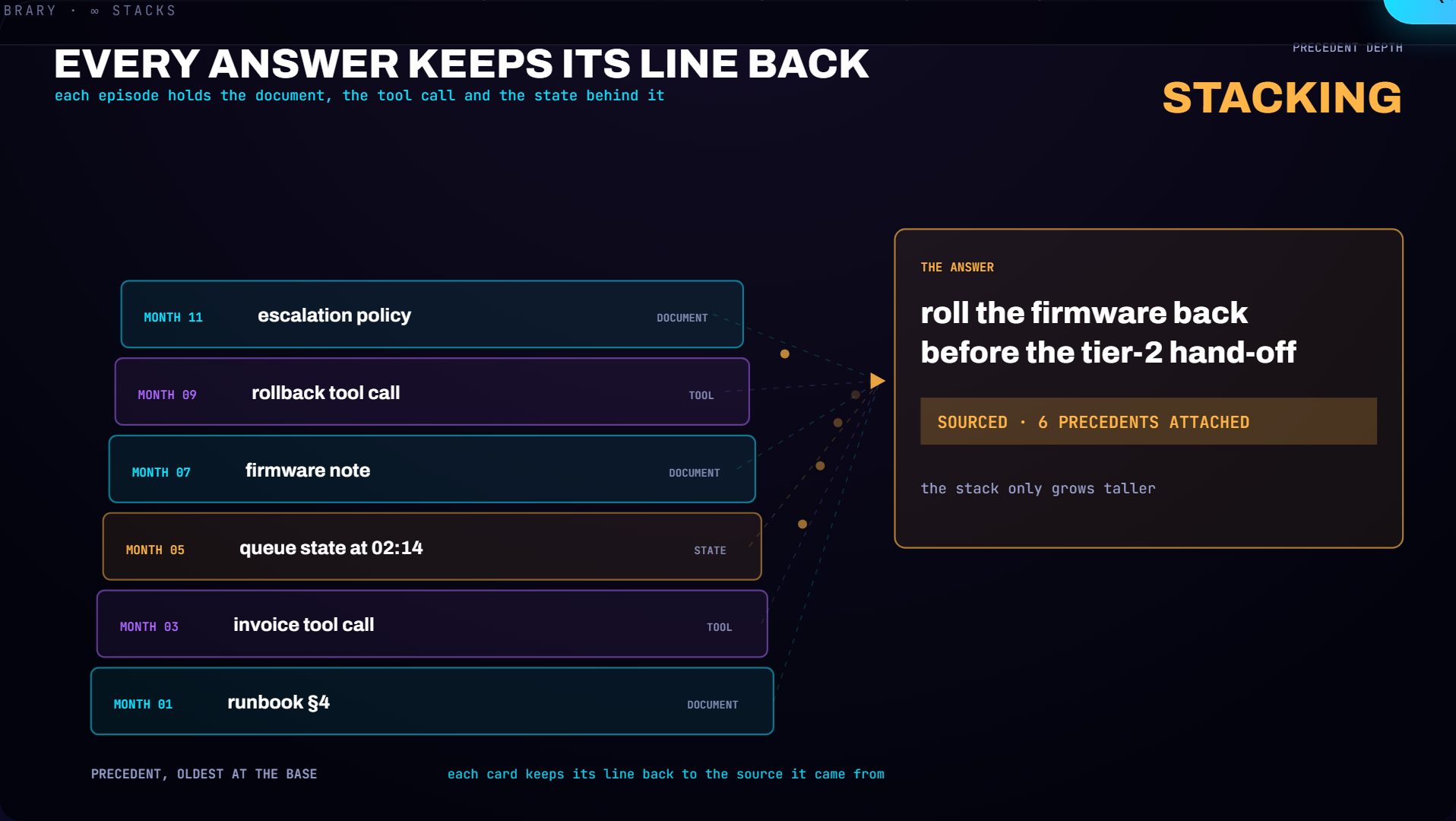
The fifth mechanism is the quiet one. Every episode keeps a line back to the documents, tools, and state behind it, so the system can answer with precedent instead of assertion, and the stack of precedent only grows taller.
| Mechanism | What it does | What keeps it running |
|---|---|---|
| Entity resolution | Each fresh mention adds features, and duplicate nodes collapse into one well-connected node | Repeated mentions of the same entities in new contexts |
| Temporal depth | Valid-time intervals hold the sequence of change, so the graph answers as of any past month | Elapsed time, month over month |
| Personalization | A coarse tier sharpens into a fine-grained model of one person | Dozens of episodes with the same person |
| Path patterns | Multi-hop routes from user to tool to outcome surface as policy the agent can walk | Episodes that record what the tools returned |
| Precedent | Every answer keeps a line back to the document, the tool call and the state behind it | Provenance captured at the moment the episode lands |
Why capital cannot rewind the clock
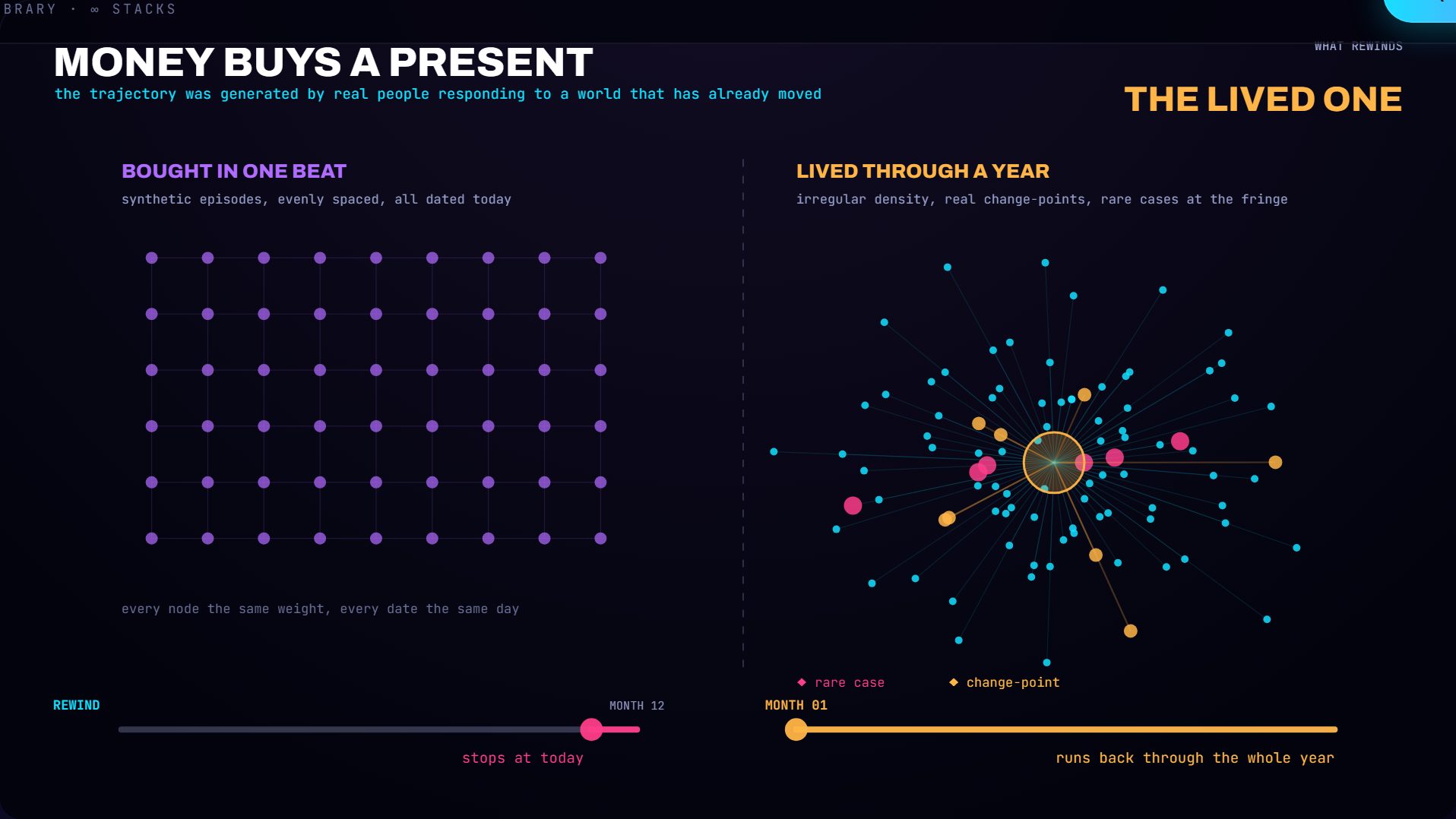
Put the five mechanisms together and the asset they build has a property that defeats the checkbook: it's path-dependent. What lives in the graph is a function of the exact sequence of real interactions, environment states, and decisions that actually occurred, in order, over time. A competitor can copy your ontology, clone your product, hire away your team, and buy a larger model, and still can't reconstruct the trajectory, because the trajectory was generated by real people with real stakes responding to a real world that has already moved on. You can't retroactively generate a year of genuine user behavior, with its seasonality, its long-tail edge cases, its reactions to changes you've already made. The year is gone. Either you spent it accumulating or you didn't, and no amount of capital buys it back.
The true moat, separated from the marketed one
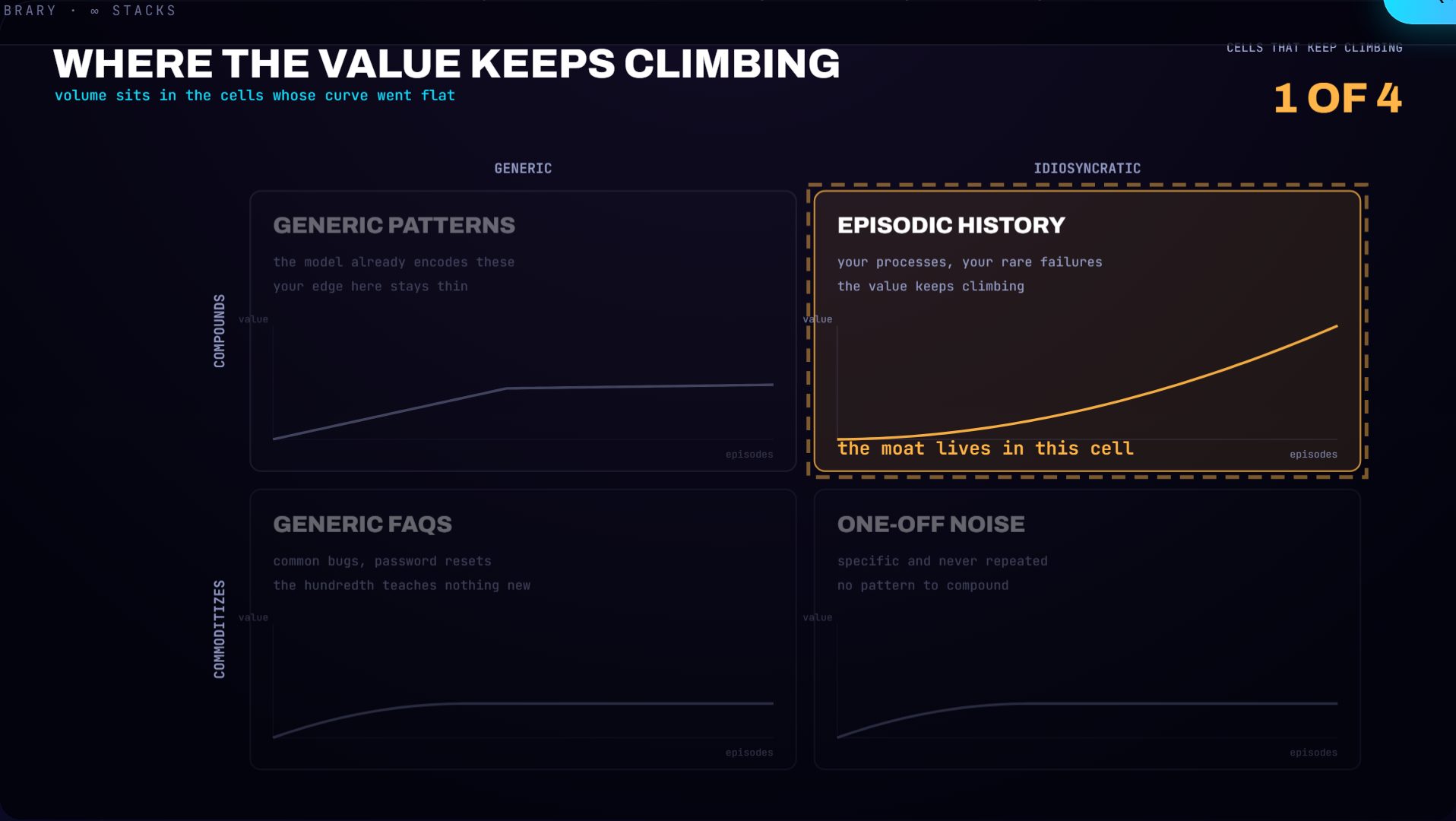
The argument has to stop here and draw a hard line, because most data-moat claims are inflated and the inflation discredits the real version. Not all data compounds. A great deal of it commoditizes: generic FAQs, common bugs, the standard password reset, the patterns a foundation model already knows. Logs of that kind pile up in enormous volume and add almost nothing, because the marginal episode teaches the system nothing it didn't already learn from the first hundred. The distinction that survives scrutiny is between data that compounds and data that commoditizes, and a moat exists only in the first category. Storing chat history isn't a moat; everyone does it. A vector store of past conversations isn't a moat either; that infrastructure is commodity. Having processed more tokens than a competitor means nothing unless it shows up as measurably better policies. The moat is the structure, the temporal depth, and the tightness of the loop from episodes to improved behavior, not the volume.
| The claim | What it actually is | What would make it a moat |
|---|---|---|
| Storing chat history | Standard practice in every product of this shape | Structure and temporal depth laid over the store |
| A vector store of past conversations | Commodity infrastructure, available on a card | Retrieval that reaches episodes a foundation model has never seen |
| More tokens processed than a competitor | A volume figure | Measurably better policies that came out of processing them |
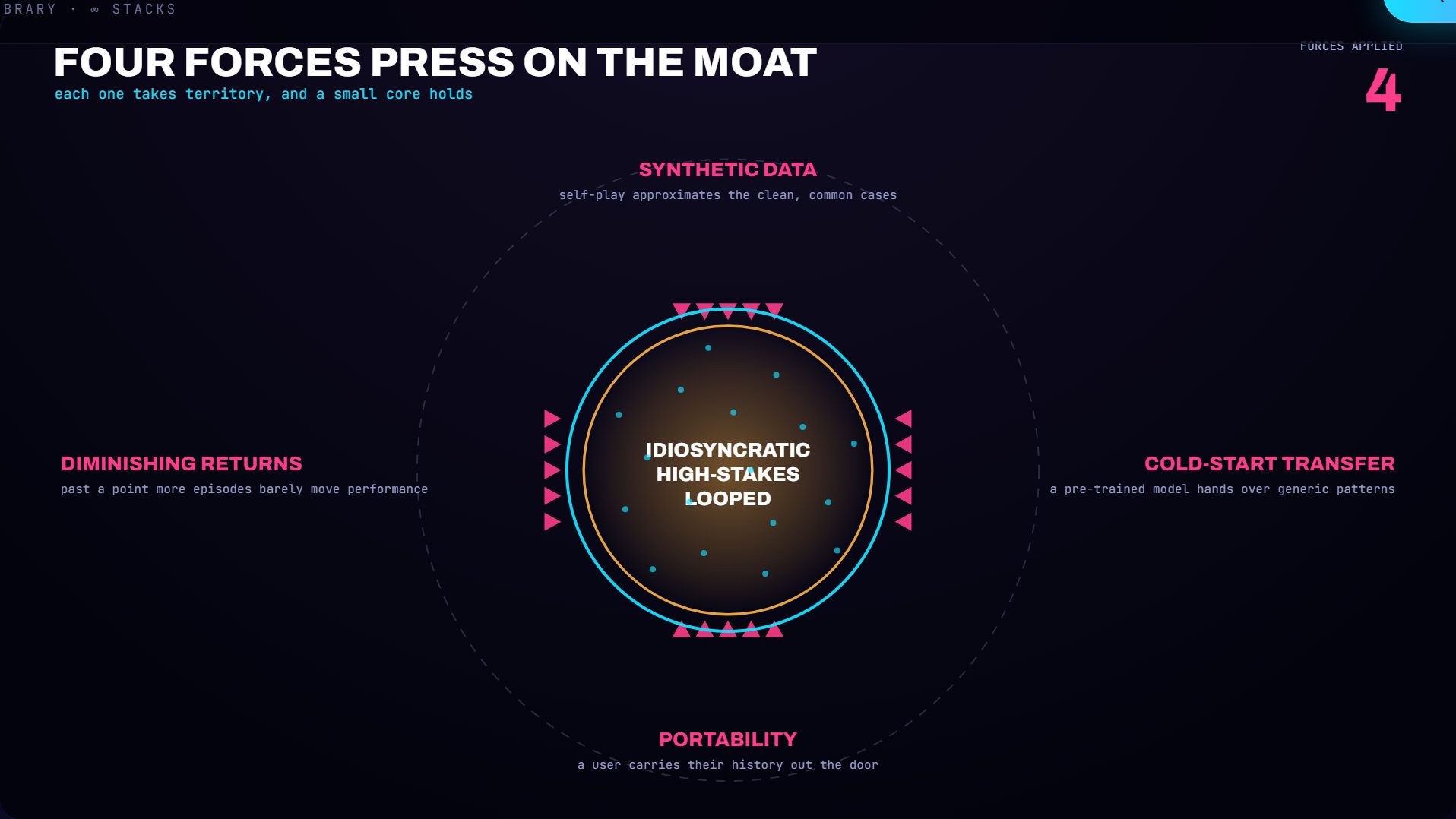
The limits go further. Many tasks show steep diminishing returns, where past a point more episodes barely move performance, and in those domains the extra year buys little. Competitors can partly close the gap with synthetic data, self-play and simulated users that approximate the common cases, which works best exactly where the environment is clean and controllable and human preference matters least. A cold-start rival inherits a great deal for free from a pre-trained model that already encodes generic interaction patterns, so where your episodic structure overlaps the generic, your edge is thin. And data portability or regulation can let users carry their history elsewhere, shifting the advantage from raw data toward the quality of your ontologies and the skill with which you turn episodes into policy. A moat claim that ignores these is marketing; a moat claim that survives them is real.
Where the moat is genuinely defensible
What survives all four forces is a specific kind of advantage. The moat is real where your episodic data is longitudinal and well-structured in a temporal graph, where the processes and behavior it captures are idiosyncratic and high-stakes rather than generic, and where a tight feedback loop turns those episodes into better policy rather than just more storage. That's the messy, human, organization-specific tail: the exact way your support actually resolved a rare failure under a policy that has since changed, the workflow quirks across your proprietary tools, the cause-and-effect edges between a product change and the user behavior that followed. Synthetic data can't credibly fake it, because the tail is neither clean nor controllable. A foundation model has never seen it, because it's private. A competitor can't transfer it, because it's yours and it's specific. The narrower you draw the moat, the more defensible it gets.
| Condition | What it requires | Where the moat thins |
|---|---|---|
| Longitudinal and well structured | Episodes in a temporal graph with valid time on every edge | A flat log store with no model of time |
| Idiosyncratic and high stakes | Processes and behaviour specific to your organization | Generic cases a foundation model already handles |
| A tight loop to policy | Episodes that change what the agent does next | Storage that grows while behaviour holds still |
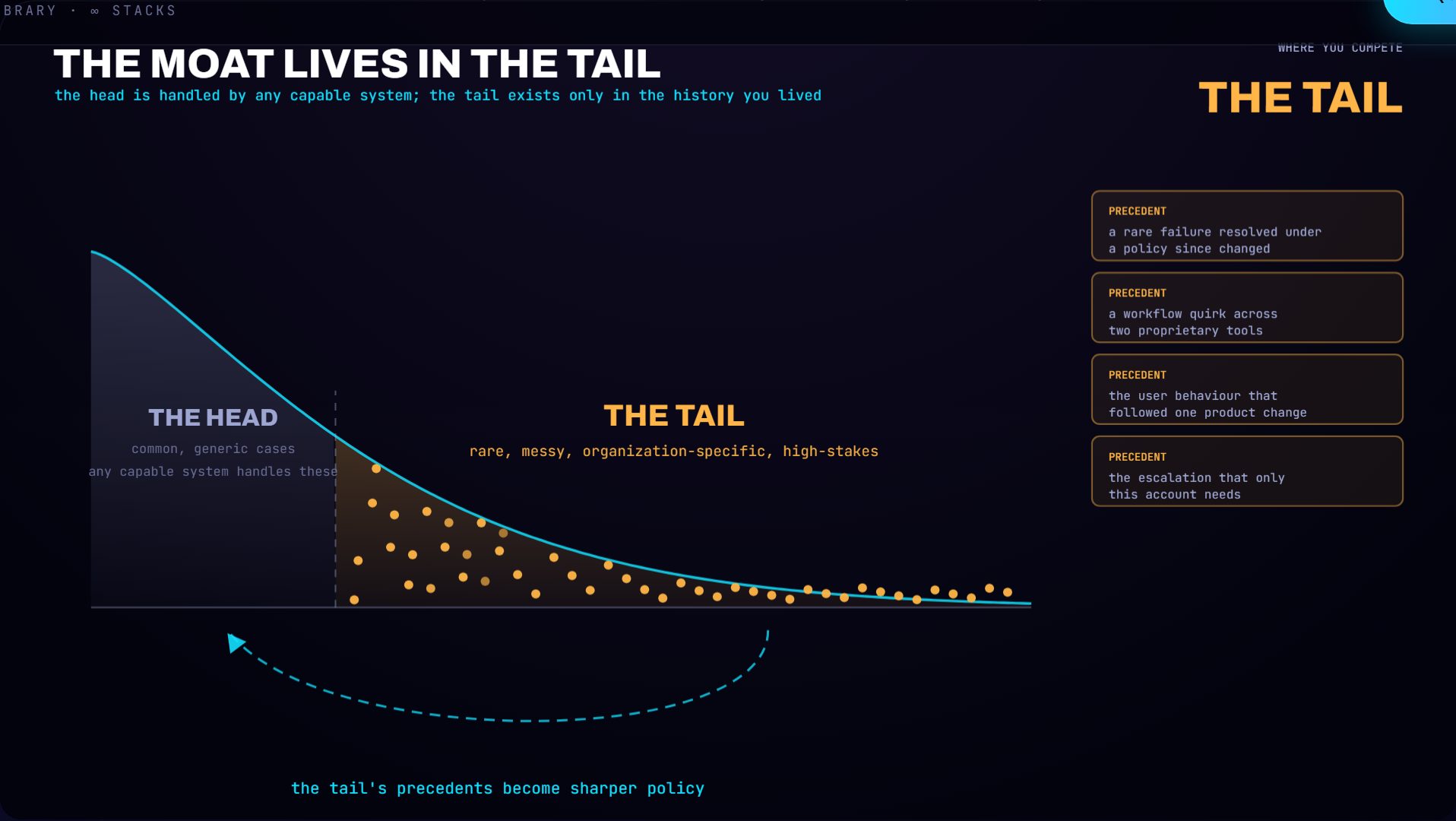
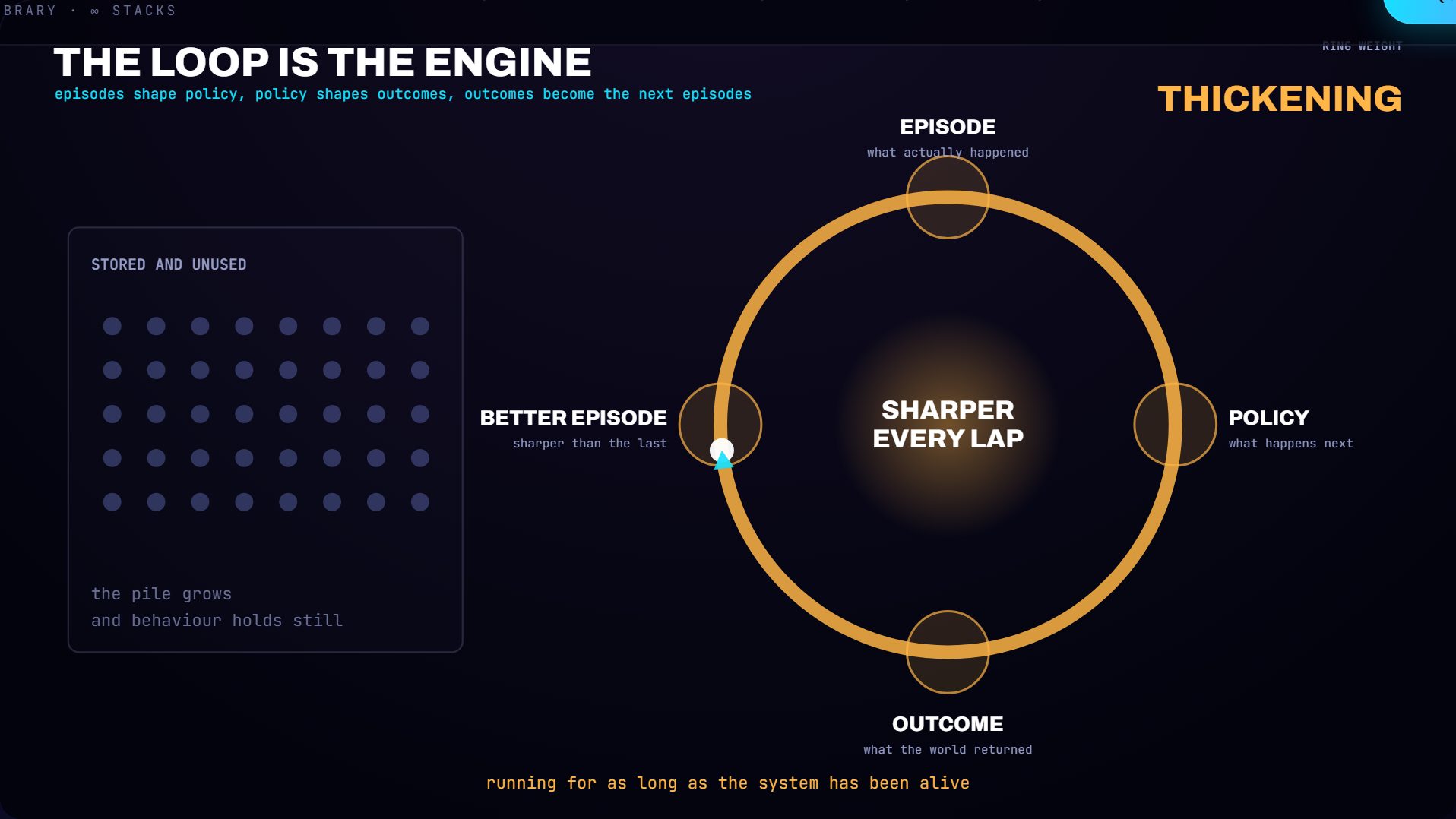
The same tail answers a quiet objection: that a smaller, smarter dataset could beat a large accumulated one. It could, for the common cases, and that's why you compete in the tail rather than the head of the distribution. In the tail there's no smaller, smarter dataset to be had, because the data doesn't exist anywhere but in the history you lived. The feedback loop is what closes it: an agent that uses the tail's precedents follows better policies, which produce better outcomes, which become better episodes, which sharpen the policies further. Storage alone is inert. The loop from episode to policy to better episode is the engine, and the engine has been running for as long as your system has been alive.
The defense of starting now
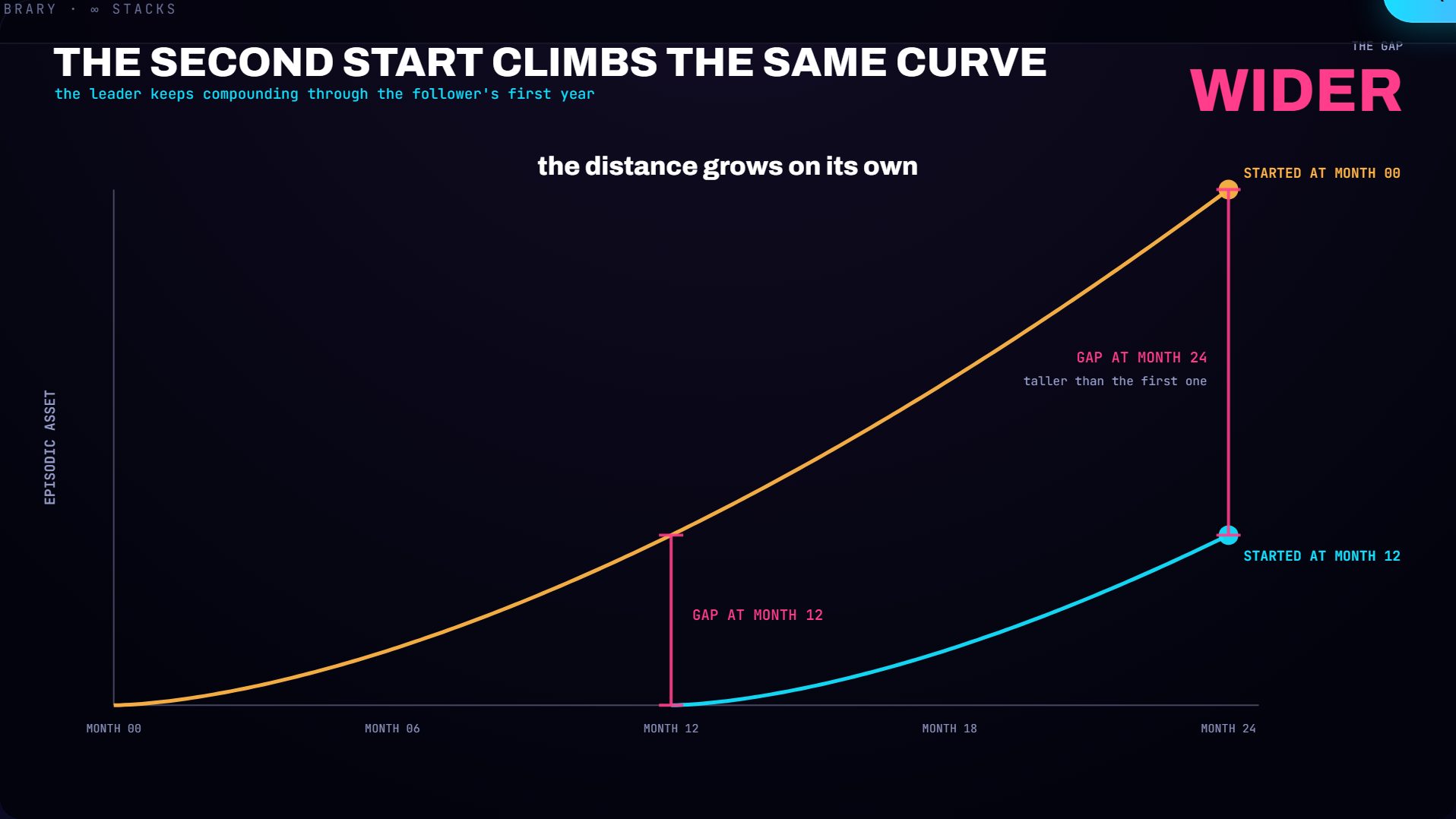
All of which resolves to a single, unglamorous strategic conclusion: start the clock. The compounding begins the first day a real interaction is captured, resolved, time-stamped, and wired into the graph, not when you have a clever idea about memory or finish designing the perfect ontology. Every day you wait is a day the loop isn't turning. A competitor who starts a year after you begins a year behind an asset that has spent that year compounding. The gap between you is wider at the end of their first year than it was at the start, because you were compounding the whole time too. The advantage is that the distance grows on its own.
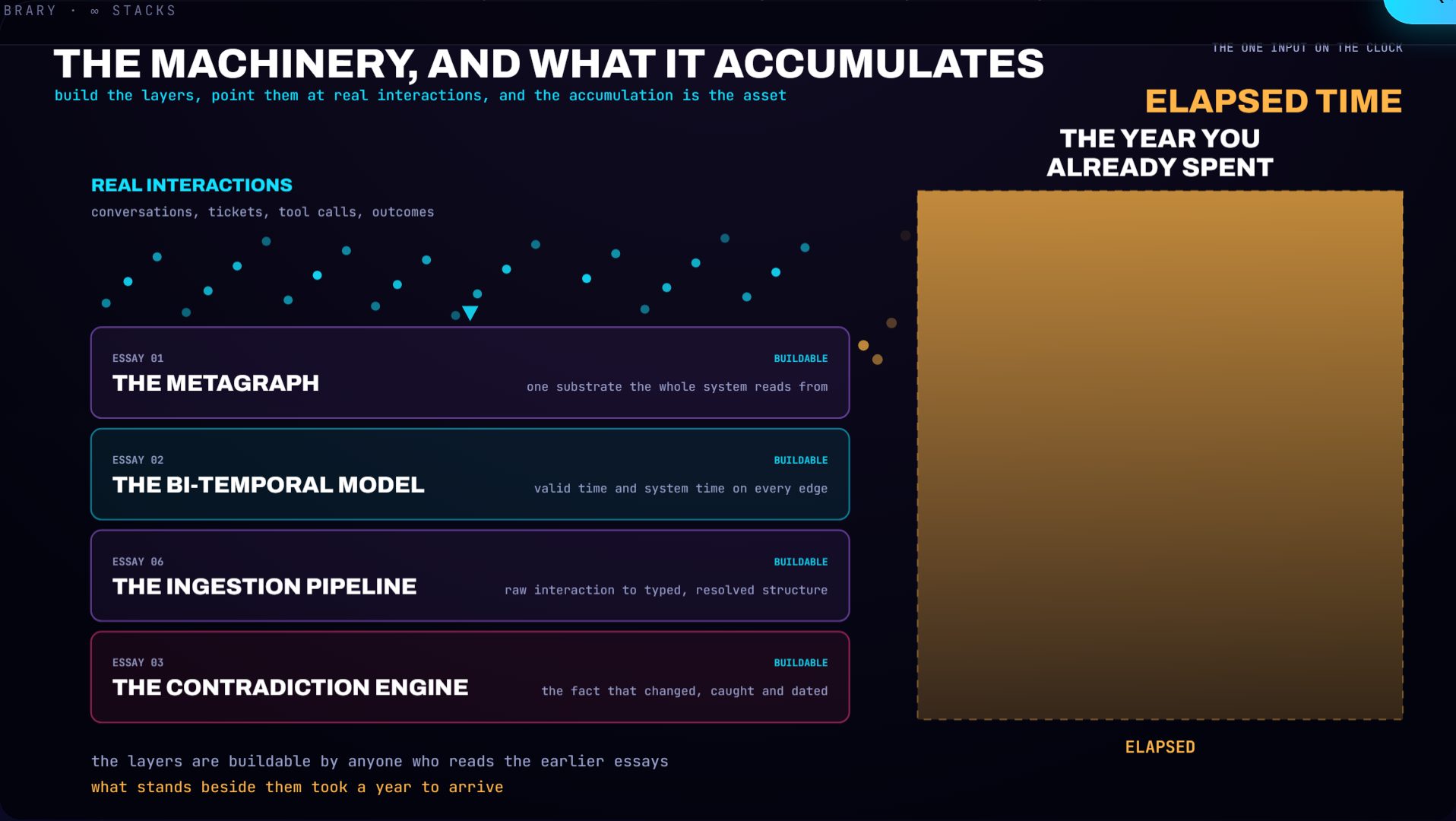
There's a reason this series spent eight essays on the machinery before arriving at the strategy. The moat is what the metagraph, the bi-temporal model, the ingestion pipeline and the contradiction engine accumulate when they run against real interactions for a long time, not those systems on their own. Build them well, as the earlier essays describe, point them at a real stream of episodes, and then the most valuable thing you own is the one thing you can never go back and buy: the year you've already spent. The next and final essay steps back from the machinery entirely, to the second-level thinking that tells you which substrate is worth betting on in the first place.
END OF ESSAY 11 · CONTINUE TO ESSAY 12 →